.webp)
The United States Forest Service (USFS) operates across 9 administrative regions, 154 national forests, and 20 national grasslands, with bridge assets distributed across a broad national network. As the agency managed this extensive network, it was also undertaking a significant transition in bridge inspection data requirements, from the National Bridge Inventory (NBI) to the Specifications for the National Bridge Inventory (SNBI).
USFS had been operating an in-house bridge management system supporting its established NBIS/NBI inspection program. While the legacy environment supported core inspection processes, it was not designed around the SNBI data structure or the practical demands of collecting inspection data in connectivity-challenged locations.
USFS partnered with AssetIntel™ to modernize this environment through inspectX™. The implementation brought together historical data migration, NBI-to-SNBI transition, direct SNBI inspection workflows, and offline field data collection.
More than a system replacement, the initiative connected legacy bridge records, field inspection activities, and evolving federal data requirements within one modern inspection environment.
The result is a modernized inspection environment designed to help USFS maintain continuity across its bridge data while building a stronger foundation for SNBI-based inspection and reporting.
USFS is modernizing bridge inspections by moving from its legacy system to inspectX™ and building a stronger foundation for SNBI.
Behind these numbers was a geographically dispersed bridge inspection program adapting to the shift from NBI to SNBI. USFS needed to preserve historical data while establishing a more modern, field-ready inspection workflow.
USFS’s bridge inspection program was built around an in-house, Oracle-based system that supported NBIS/NBI inspection processes and historical bridge records. As inspection requirements shifted from NBI to SNBI, the agency needed to modernize its data environment without losing its existing inspection history or disrupting ongoing operations.
At the same time, USFS inspectors worked across a geographically dispersed network where reliable connectivity was not always available. The legacy environment lacked a dedicated offline inspection capability, requiring inspectors to document findings in the field using paper forms and cameras, then manually re-enter the information into the system after returning to a connected location.
USFS therefore needed a modernization approach that could:
USFS selected inspectX™ to modernize its bridge inspection program and support its transition from NBI to SNBI. The implementation addressed two connected areas of modernization: data and field workflows.
Together, these changes created a more connected inspection environment for USFS.
Data modernization focused on bringing historical bridge and inspection records from the legacy system into inspectX™, while converting the latest NBI data into an initial SNBI baseline. This gave USFS a more structured and accessible foundation for managing inspection information.
As part of the implementation, AssetIntel™ migrated USFS’s historical bridge and inspection data from its legacy system into inspectX™.
Rather than starting with a new, empty system, USFS was able to carry its existing bridge and inspection history into the modernized platform.
💡Legacy System → Historical Data Migration → inspectX™
This established inspectX™ as the central environment for managing USFS bridge inspection information while preserving historical records.
The transition to SNBI required USFS to move beyond its existing NBI-based data environment.
At the beginning of the transition, USFS had no inspection data collected in the new SNBI format.
AssetIntel’s SNBIX™ is NBI-to-SNBI translation tool that transforms, validates, and structures inspection data to align with SNBI requirements. AssetIntel™ used it to transition USFS’s latest NBI data into the SNBI format, establishing an initial SNBI baseline for its bridge inventory. Non-derivable SNBI items can be flagged for field verification during the next inspection cycle.
💡Latest NBI Data → SNBIX™ → Initial SNBI Baseline
This gave USFS a starting point for continuing its inspection program directly within the SNBI framework.
With the baseline established, USFS inspectors can perform inspections directly in the SNBI format through inspectX™.
Instead of continuing to collect inspection information under a legacy NBI-based workflow and converting it later, the agency can now build its inspection records within the new SNBI environment.
This creates a more direct path from field inspection to SNBI-ready inspection data.
For USFS, modernization also needed to work in the field.
inspectX™ provides offline inspection capabilities that allow inspectors to take the application into remote locations, access their inspection work, and collect information without an active internet connection.
Once connectivity becomes available, inspectors can synchronize the collected information with the central system.
💡Download → Inspect Offline → Synchronize → Record Updated
This eliminates the need to maintain a separate field-to-office data-entry process simply because an inspector is working in an area without reliable connectivity.
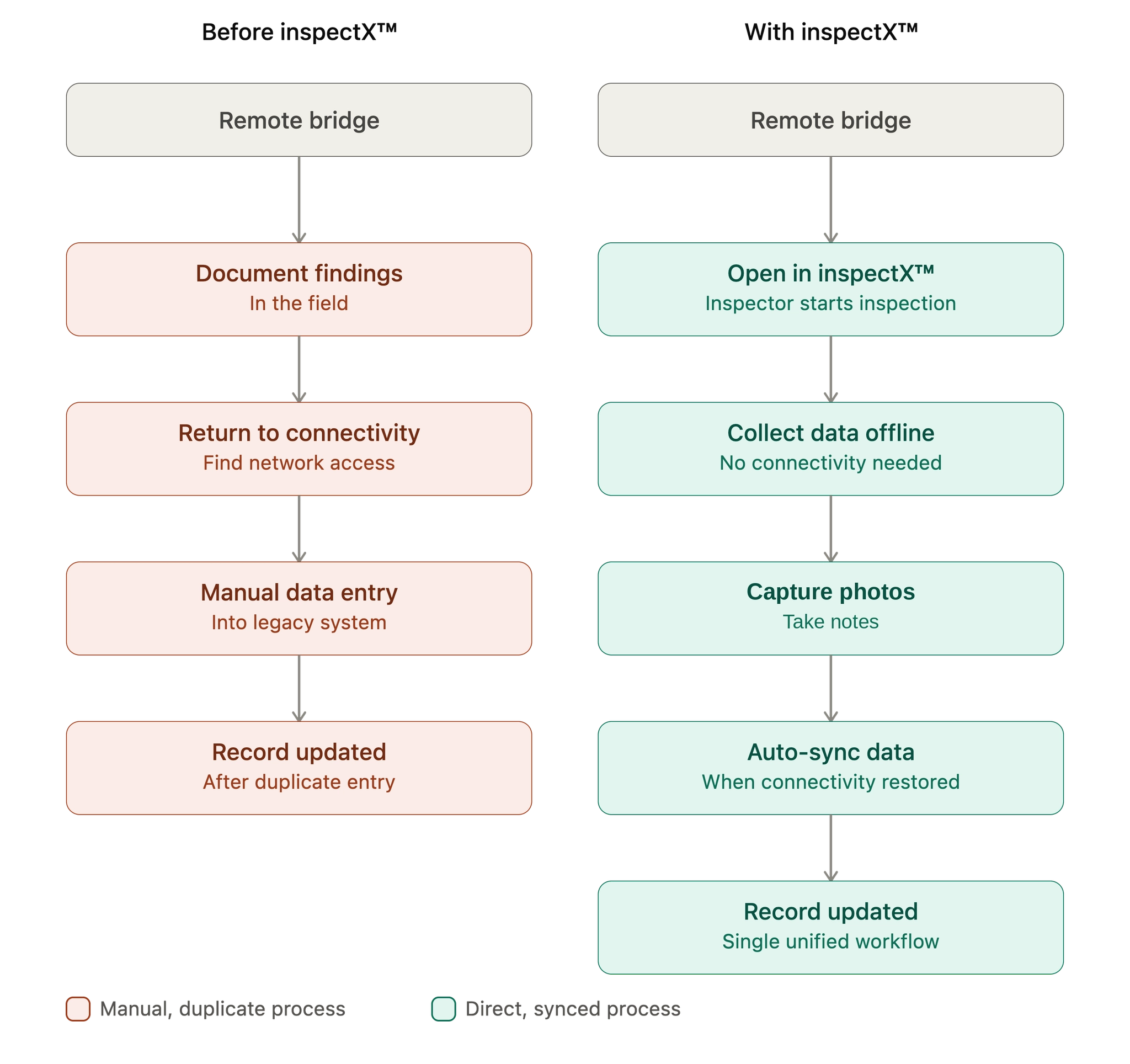
For remote bridge inspections, the process often involved two separate steps. An inspector would document inspection findings in the field, sometimes without connectivity, and then return to an area with reliable internet access. The information collected in the field had to be manually entered into the legacy system before the inspection record could be updated. This meant the same information was essentially handled twice, first in the field and again in the system.
With inspectX™, the field inspection becomes part of the same digital workflow. Inspectors can open the inspection directly in inspectX™ and collect inspection data on their tablets, even when working without internet connectivity. Once connectivity is restored, the collected information automatically synchronizes with the system, updating the inspection record without requiring a separate manual data-entry step. This brings field collection and the system of record into one connected workflow, even when the field itself is not connected.
Modernizing the field workflow was only one part of the transformation. For USFS, the next step was ensuring the data being collected in the field aligned with the new SNBI requirements.
USFS’s transition involved more than changing the format of its inspection data. The agency began implementation without inspection data collected in the new SNBI format, creating the need for a structured path from its existing NBI-based records to an SNBI-ready inspection environment. AssetIntel™ supported this transition by migrating historical inspection records from the legacy system into inspectX™ and using SNBIX™ to convert the latest NBI data into an initial SNBI baseline.
With this baseline established, USFS moved forward with conducting inspections directly in SNBI through inspectX™, giving inspectors a standardized digital workflow for collecting, managing, and maintaining inspection data. The modernized environment preserves historical records while providing centralized inspection data, offline field inspection capabilities, and reducing duplicate data entry between field activities and office systems.
Together, these improvements provide USFS with a more consistent and connected bridge inspection workflow and establish a foundation for ongoing SNBI data management and reporting. With inspections now being performed directly in SNBI, USFS is positioned to work toward the March 2028 federal SNBI data-submittal milestone.
Moving from a legacy NBI-based environment to an SNBI-ready inspection program is a significant step, but the value goes beyond the transition itself. The real difference is how that foundation supports day-to-day inspection work. For USFS, the modernization translated into practical improvements across data, field operations, and inspection management.
USFS’s historical bridge and inspection records were migrated from its legacy system into inspectX™, providing a centralized environment for managing inspection information. The transition preserved valuable historical data while bringing it into a modern inspection management platform, giving USFS a more accessible and structured foundation for ongoing bridge program management.
Using SNBIX™, USFS transitioned its latest NBI data into SNBI, establishing an initial baseline. Inspectors can now conduct inspections directly in inspectX™ using SNBI-based digital workflows, creating continuity from existing data to field inspection.
Workflow modernization brought data collection closer to the field, enabling inspectors to complete inspections directly on tablets, even in remote locations without reliable connectivity.
USFS inspectors can collect inspection information in remote locations where reliable internet connectivity may not be available. Through inspectX™, inspection data can be captured and managed offline on supported field devices, allowing the inspection workflow to continue without interruption. Once connectivity is restored, the collected information can synchronize with the centralized system.
The modernized workflow reduces the need to document inspection findings separately in the field and manually re-enter the same information into an office-based system. By capturing inspection data directly in inspectX™, field collection and system records become part of one workflow, helping reduce repetitive data entry, improve data consistency, and streamline inspection record updates.
The modernization gives USFS a structured foundation for continuing its transition to SNBI-based bridge inspection and data management. With an initial SNBI baseline established and inspectors working directly within the SNBI workflow, USFS can continue building and maintaining its SNBI data in preparation for the March 2028 federal SNBI data-submittal milestone.
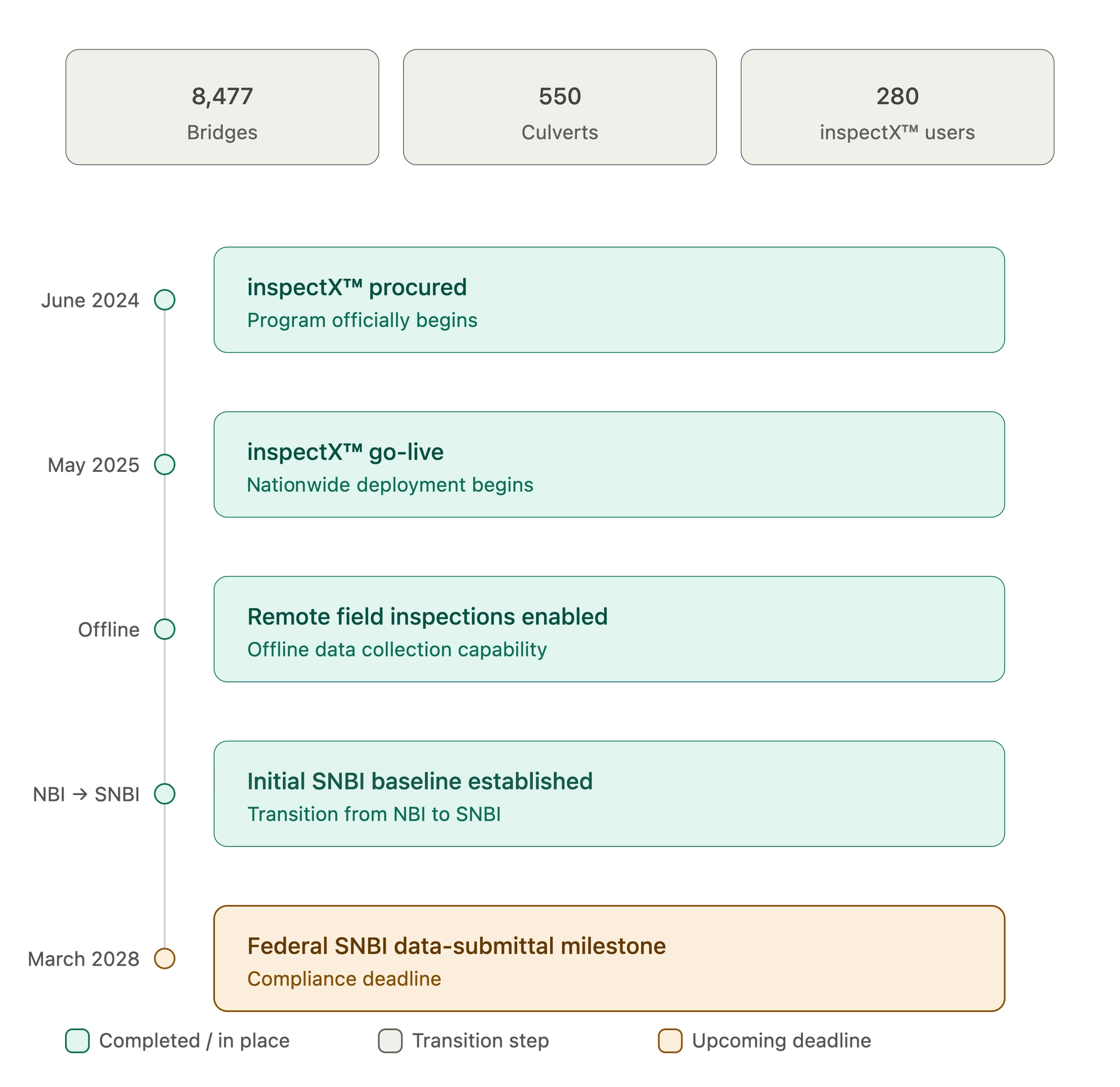
The timeline traces USFS’s move from inspectX™ procurement and deployment to offline field inspections and an initial SNBI baseline. Together, these milestones show the program’s shift from a legacy NBI-based environment toward a more connected, field-ready inspection workflow, with continued progress toward the March 2028 SNBI data-submittal milestone.
The USFS implementation demonstrates how bridge inspection modernization can address both evolving data requirements and real-world field conditions. By bringing together historical data migration, NBI-to-SNBI transition, direct SNBI inspections, and offline field capabilities, inspectX™ provides USFS with a modern foundation for managing its bridge inspection program today while preparing for the requirements ahead.
From legacy data to SNBI. From manual re-entry to direct field collection. From disconnected workflows to a more connected inspection program.
For bridge owners and transportation agencies navigating similar transitions, AssetIntel™ helps bring data, field operations, and inspection management together in one modern environment.
Take the Next Step Towards Modern, SNBI-Ready Bridge Inspections. Request a Demo.
Ready to transform your operations? Schedule a consultation today and unlock the full potential of your asset management capabilities with our innovative solutions.