.webp)
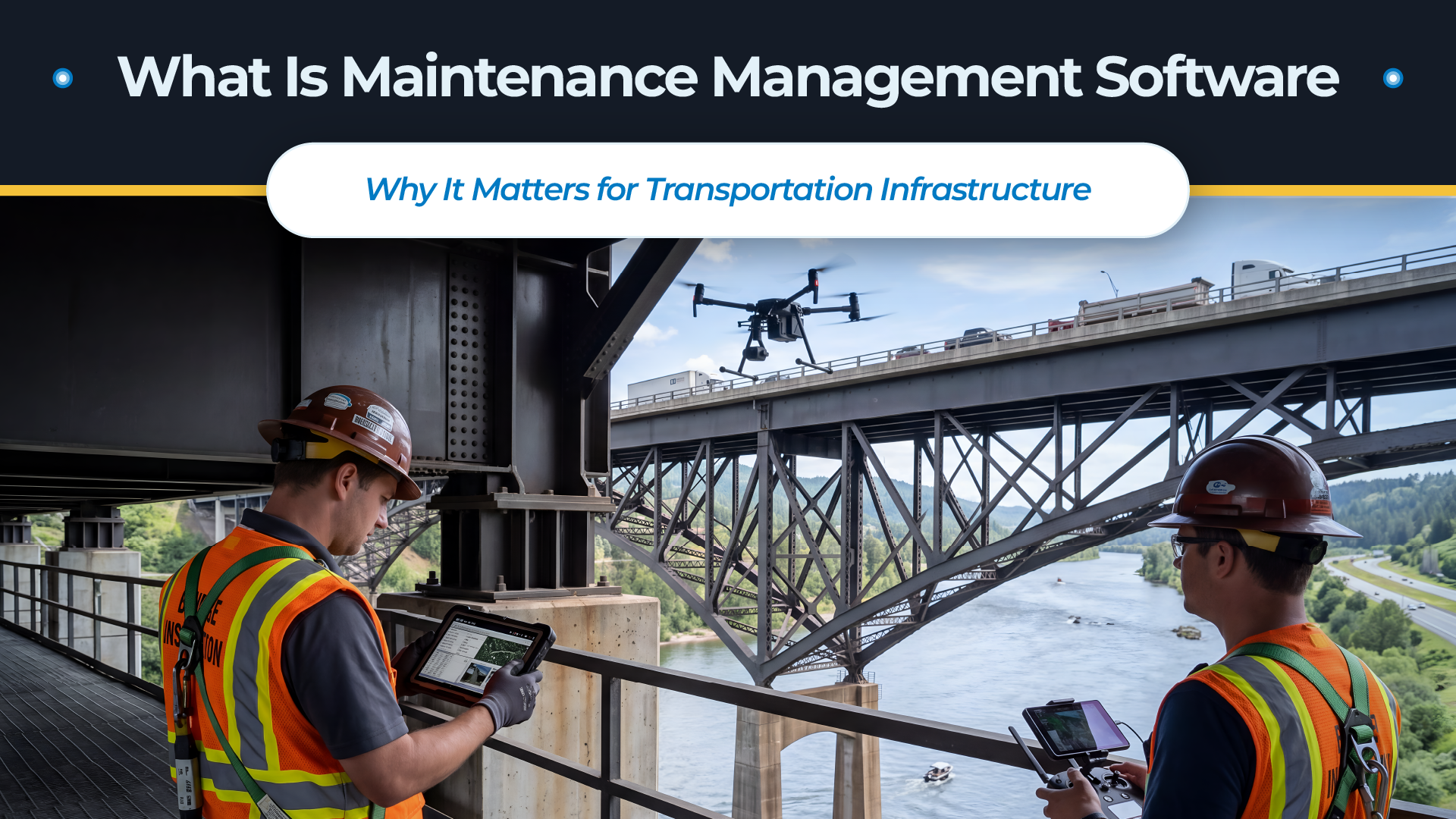
Transportation infrastructure - the networks of bridges, tunnels, culverts, and retaining walls that connect cities and economies - faces continual wear and aging. Maintenance isn’t just about repairing what fails; it’s about ensuring public safety, extending asset life, and using limited budgets wisely. Managing these assets manually or through fragmented systems often leads to delays, data gaps, and inefficient spending. This is where Maintenance Management Software (MMS) provides a structured, transparent way to plan, execute, and monitor maintenance work.
At its core, Maintenance Management Software is a centralized digital system that helps organizations oversee their maintenance activities - from inspection scheduling and work tracking to resource allocation and documentation.
For transportation agencies, MMS serves as a data hub for:
In short, it replaces disjointed spreadsheets and manual processes with a unified, data-driven workflow.
Computerized Maintenance Management System (CMMS) and Maintenance Management Software (MMS) are often used interchangeably, but their focus differs.
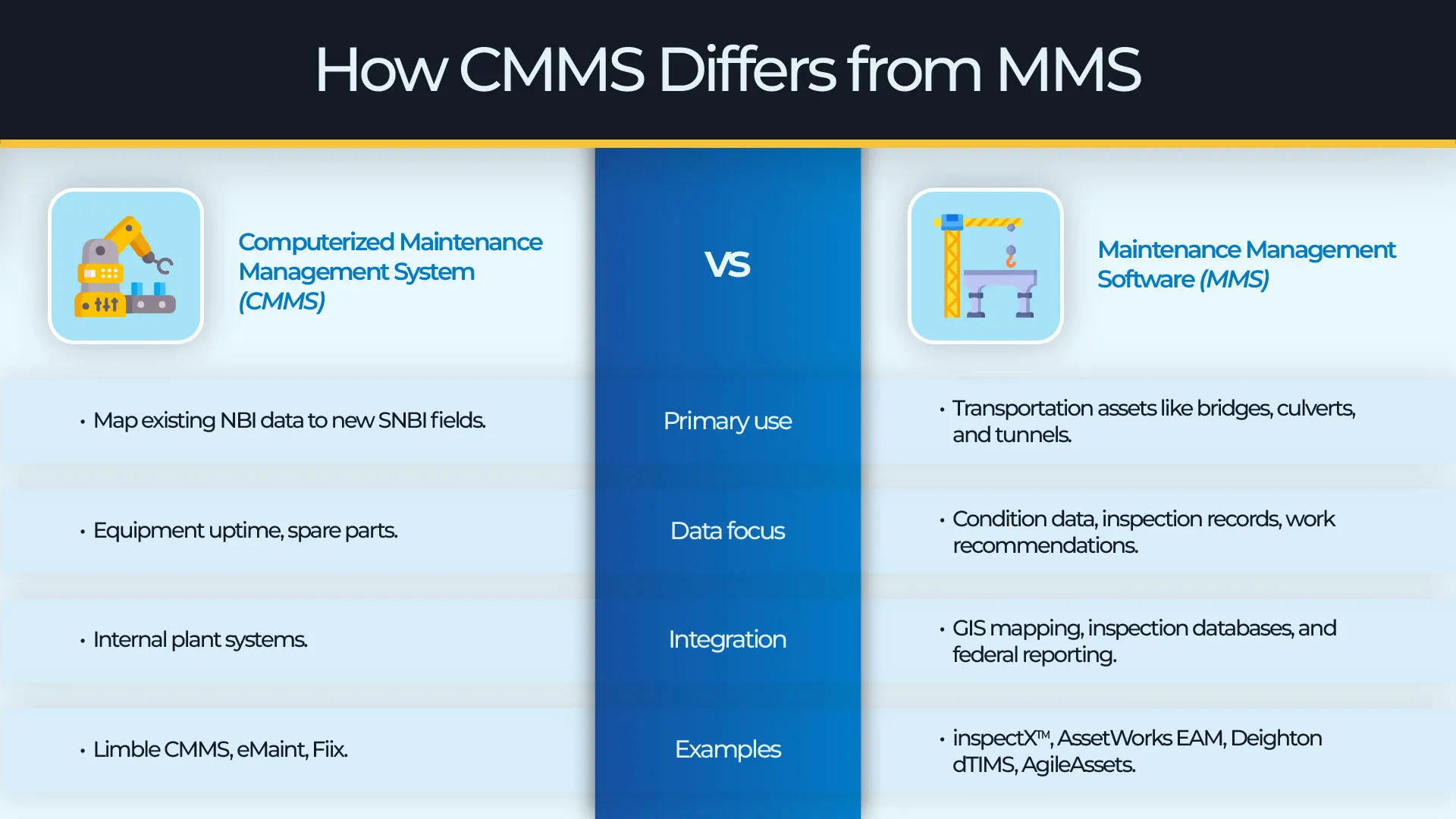
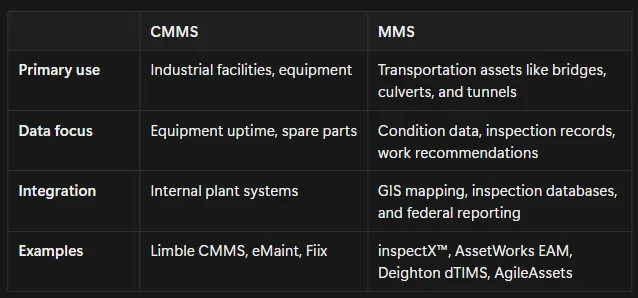
While CMMS helps factories manage machines, MMS platforms are designed for agencies managing geographically distributed assets subject to federal and state reporting standards.
Transportation agencies often oversee thousands of assets across large regions. Each has its own inspection schedule, maintenance record, and risk level. MMS provides the structure to handle this complexity.
A practical example: when a bridge inspection reveals deck cracking, the system logs the defect, assigns it a priority, and schedules follow-up work. The process remains traceable from identification to resolution - improving accountability and record accuracy.
Historically, maintenance programs were reactive - addressing issues only after failure. MMS supports preventive maintenance, where routine interventions prevent deterioration from escalating.
Through automated scheduling and task reminders, the software ensures periodic cleaning, joint sealing, or painting is performed before more costly rehabilitation is required. Over time, this proactive model reduces life-cycle costs and improves network reliability.
Maintenance decisions compete for limited funds. MMS allows agencies to analyze condition data and performance trends to prioritize which assets need immediate action.
This naturally raises a critical question for bridge owners: what systems help unify inspections, maintenance work orders, and capital planning in one place? A comprehensive Maintenance Management System (MMS) addresses this need by bringing these functions together into a single, connected platform. Platforms like manageX™ support this approach by helping agencies visualize inspection data, maintenance history, and budget allocation in one place. When paired with inspection tools such as inspectX™, decision-makers can easily trace field observations to maintenance outcomes - ensuring every action is backed by data and accountability.
Such informed planning ensures maintenance efforts are directed where they have the most measurable impact, optimizing both cost and performance over time.
In many programs, field inspectors and office engineers operate on separate systems. MMS bridges that gap through real-time data exchange.
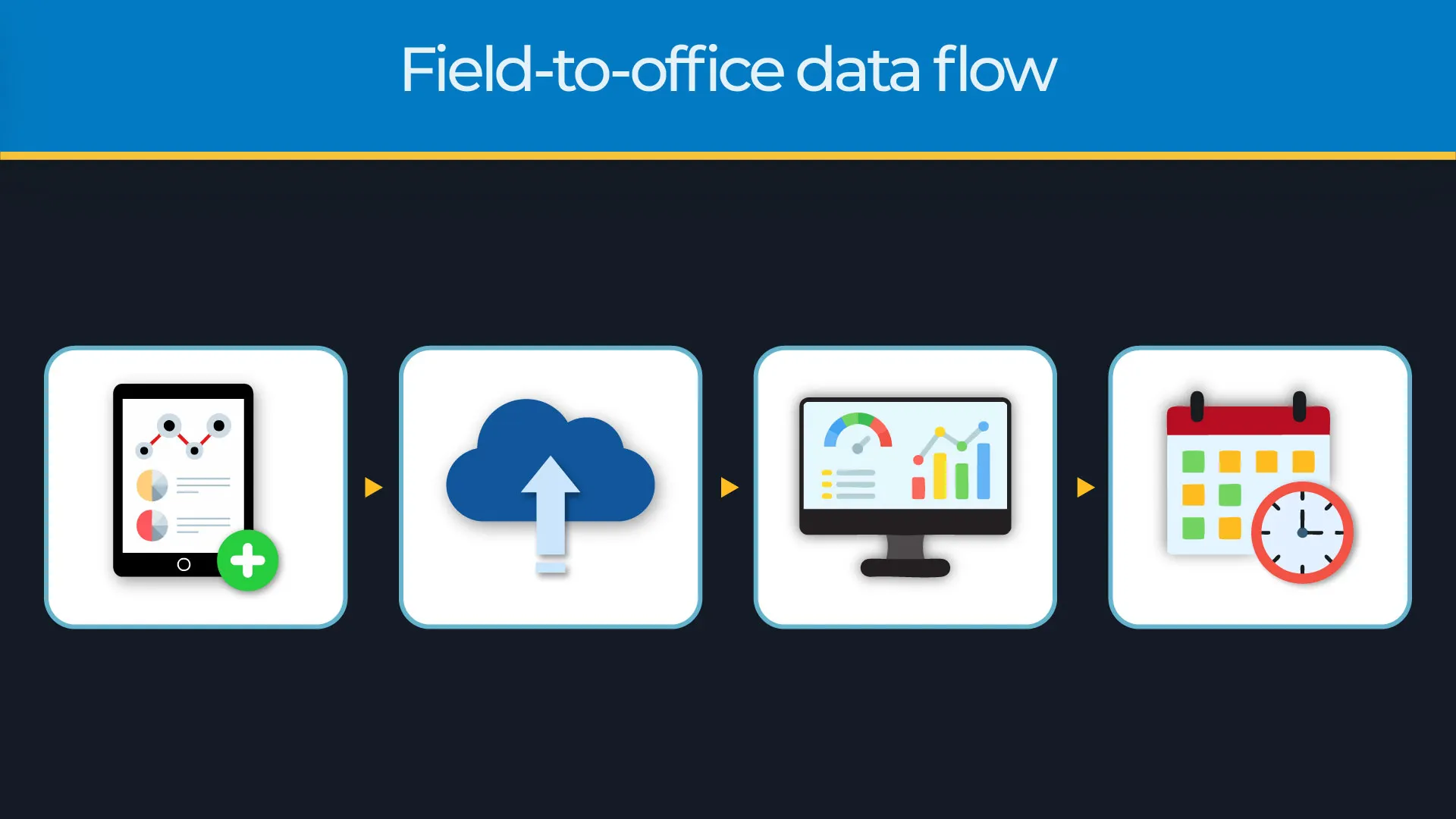
Inspectors can collect data in the field - even offline - using tablets, capturing photos and notes that automatically sync to the central database. Office staff can then review, comment, or approve findings digitally, reducing turnaround time.
This workflow, used in platforms like inspectX and AssetWorks EAM, improves efficiency while maintaining consistency between inspection teams and program managers.
Bridge and tunnel programs in the U.S. operate under the oversight of the Federal Highway Administration (FHWA) and must comply with inspection and reporting requirements such as the National Bridge Inventory (NBI) and Safety of National Bridge Inventory (SNBI) standards.
MMS platforms support compliance by:
The FHWA Bridge Management and NBI/SNBI guidelines emphasize the importance of standardized, traceable data for effective oversight (FHWA Bridge Management, FHWA NBI).
By embedding these standards into their workflows, agencies reduce reporting errors and ensure readiness for audits and performance reviews.
Several software solutions serve the maintenance and asset-management needs of transportation agencies:
Each of these systems focuses on infrastructure-scale maintenance - integrating field data, GIS, and long-term performance modeling to inform capital investment planning.

Maintenance management is no longer focused solely on documenting asset conditions and scheduling repairs. As agencies face aging infrastructure, tighter budgets, and increasing performance expectations, the focus is shifting toward smarter, more connected approaches that improve planning, resource allocation, and long-term asset performance. As part of this shift, agencies are increasingly asking: What platforms can help estimate the cost impact of different bridge repair or replacement scenarios?
Emerging technologies are accelerating this transformation, enabling agencies to make more informed decisions, strengthen collaboration, and manage infrastructure more proactively.
These developments suggest that MMS will continue to evolve from an operational tool into a strategic decision-support platform for infrastructure resilience.
Maintenance Management Software is no longer optional for transportation agencies - it’s becoming fundamental.
It brings together inspection, maintenance, and asset data into one accessible system, ensuring decisions are transparent, data-driven, and defensible. From preventive maintenance scheduling to federal reporting, MMS supports both daily operations and long-term planning.
As FHWA guidance and real-world implementations like NHDOT’s show, the path forward in transportation infrastructure depends on not just maintaining assets - but managing them intelligently.
Ready to transform your operations? Schedule a consultation today and unlock the full potential of your asset management capabilities with our innovative solutions.